Perimenopause
Perimenopause is the hormonal transition phase before menopause. It can last for years and may show up through changes in sleep, cycle, mood, recovery, stress tolerance and body awareness — even while periods are still regular.
Perimenopause often does not start with one obvious moment. It often begins with subtle changes: sleep feels different, recovery takes longer, stress hits harder, and your body no longer feels familiar.
Articles about Perimenopause
Hormone Balance for Women: What You Really Need to Know
Your hormones influence everything — from sleep and mood to training and metabolism. An overview of the key fundamentals of female hormone balance.
Recognizing Perimenopause: 8 Signs Many Women Overlook
Perimenopause often starts earlier than expected — and shows up differently than you'd think. These 8 signs are worth knowing.
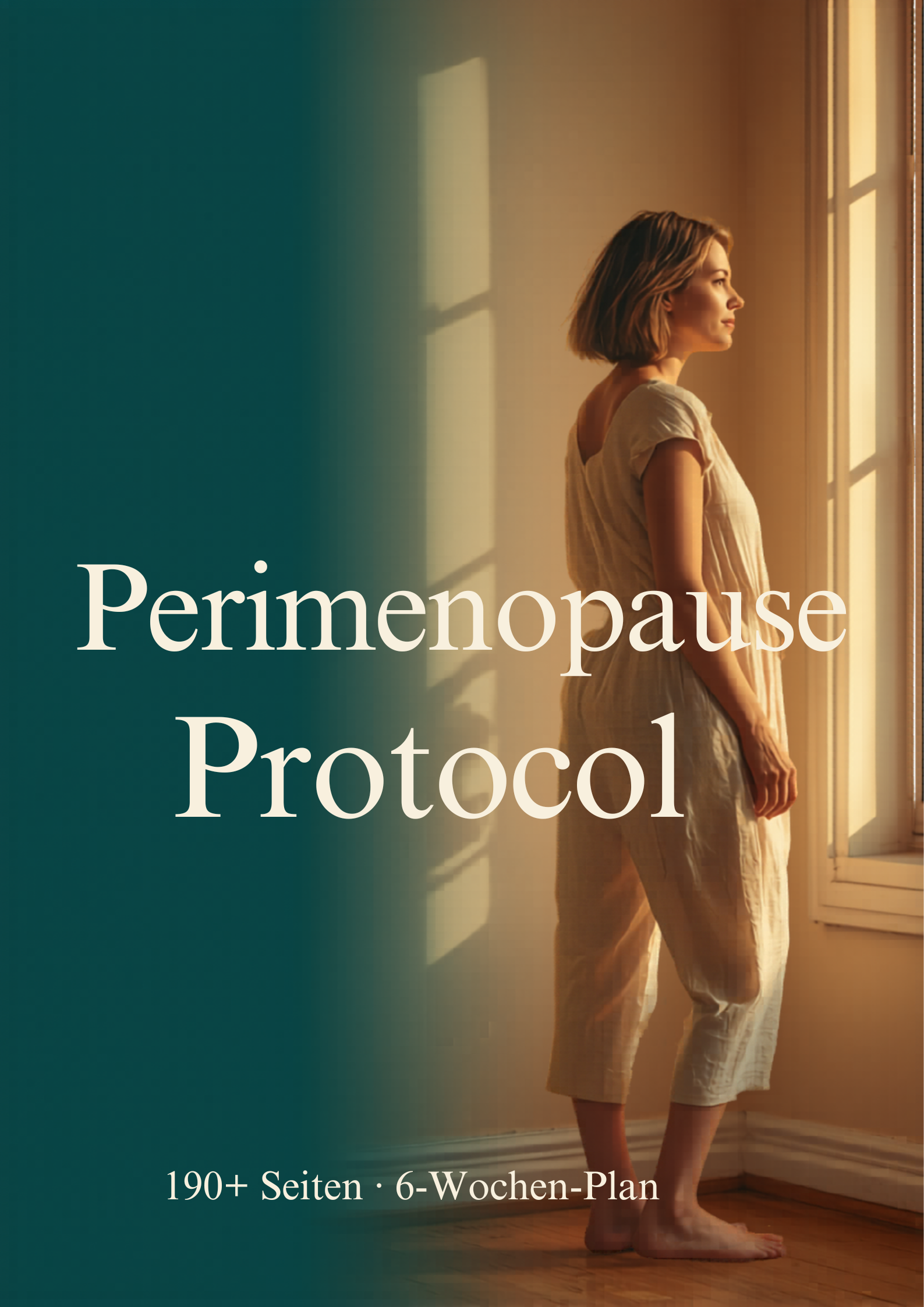
Perimenopause Protocol
Your 6-week roadmap for perimenopause: 190+ pages, step-by-step guide, recipes, trackers, and exercises.
Related topics
hormone-zyklus
Die Perimenopause veraendert den gesamten Hormonhaushalt. Im Hormone-&-Zyklus-Bereich findest du Grundlagenwissen ueber das Zusammenspiel von Oestrogen, Progesteron und Cortisol.
histamin
Sinkende Oestrogenspiegel koennen den Histamin-Abbau verlangsamen. Viele Frauen bemerken in der Perimenopause erstmals Histamin-Beschwerden oder eine Verschlechterung bestehender Symptome.
training
In der Perimenopause veraendern sich Regeneration und Belastbarkeit. Im Training-Bereich findest du Strategien, um dein Training an die veraenderte Hormonlage anzupassen.
Frequently asked questions
Can perimenopause start in the late 30s?
Perimenopause can begin as early as the mid to late 30s. Many women notice the first changes 5 to 10 years before their last period, often without recognizing them.
Can I be in perimenopause if my cycle is still regular?
Yes, a regular cycle does not rule out perimenopause. Hormonal changes often begin before the cycle visibly changes — sleep, mood and recovery are frequently the first signals.
Why do sleep, mood and recovery change?
Declining progesterone and fluctuating estrogen levels directly affect sleep quality, stress resilience and recovery capacity. These changes are hormonal and not a sign of weakness.
What is the difference between PMS, stress and perimenopause?
PMS occurs cyclically and ends with menstruation. Chronic stress affects the entire cycle. Perimenopause shows up through increasing irregularity and new symptoms that extend beyond individual cycle phases.
Does the Perimenopause Protocol replace medical care?
No, the Protocol provides evidence-based knowledge for self-help. It does not replace medical diagnostics or therapy. For severe symptoms, please consult your physician.
When should I consider coaching?
Coaching is recommended when you need individual guidance — for example with multiple concurrent symptoms, uncertain diagnostics, or the desire for a personal plan for nutrition, training and lifestyle.
More about Perimenopause?
Discover my products and coaching — evidence-based and tailored to you.
Explore offers